T W G : Design Journal

OUT AND ABOUT: WAIHEKE ISLAND YACHT CLUB

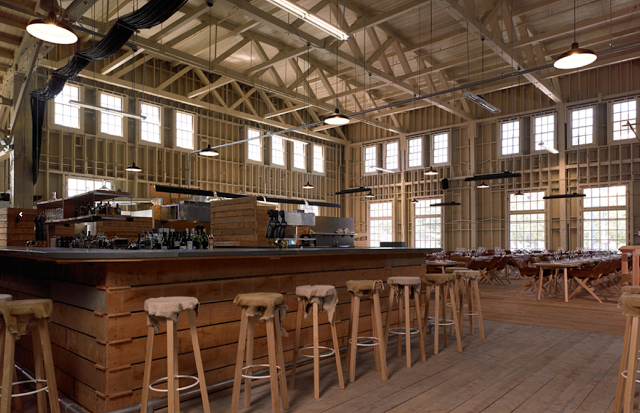
Stools draped in animal skins cosy up to the bar at WIYC restaurant
Photo - WIYC

Paul Wiseman became a world-traveler at the ripe young age of 17. He graduated from high school in 1971 and immediately set out for Europe, Indonesia, and Australia with his best buddy, Chiles Wilson. Through Sacramento Delta farming connections, the two of them spent six months working on a pear ranch in Australia. Paul also attended university in Tasmania for a year, skiing in New Zealand on one of his school breaks. So, Paul has always had a soft spot in his heart for all things Australasian.

Comfortable and stylish leather seating
Photo - WIYC

When Paul got wind of Waiheke Island Yacht Club, the hip new pop-up restaurant on Pier 29 in San Francisco, he made a beeline there with friend and architect Micheal Mullin. The restaurant was conceived by architects Fearon Hay, chefs Desmond Harris and Hayden McMillan, and furniture designers Douglas & Bec. Their goal was to recreate "the easy, dream-like quality of New Zealand’s beautiful Waiheke Island."

Couple taking in a late lunch
Photo - PVW

Paul felt duly transported: "The space has great simplicity with it's whitewashed wood, bar stools casually draped with animal hides, leather-covered tables, and comfortable leather-upholstered seating. The food is honest and the presentation is artful. I had a delicious lamb dish with grilled leeks." YUM!

Lamb dish pleasing to the eye and palate
Photo - PVW


The WIYC Restaurant is open for lunch and dinner Monday to Sunday. Seating times are available from 11am for lunch and in the evenings from 5pm to 10pm for dinner.


The WIYC Bar is open from 11am to 2am Monday to Sunday.


~

MEET AND GREET: LAUREN DALEY, SENIOR DESIGNER


The Wiseman Group is known for its deep field of design talent, and Lauren Daley is one of the reasons why. She is a Senior Designer with the firm, and, since joining the team in 2002, has made herself a valued, indispensable member of the staff.

Lauren grew up in the Los Angeles area and went to Skidmore College in Upstate New York. After graduation she held a variety of positions in the design world, taking time to educate her eye and learn the ins and outs of the trade. While working in New York City, she attended classes at Parsons School of Design. She also worked in the design industry in Los Angeles and San Francisco before landing at TWG.

When Lauren is involved in a TWG project, she facilitates ongoing communications among the client, the contractor, and TWG. This is an important role as this dialogue is key to the evolution and eventual success of a project. Her design duties require a broad range of skills including the use of AutoCAD (computer-aided design) for the creation of custom furniture, as well as for space planning and furniture layout. Lauren's keen eye also makes her exceptionally good at searching out luxury furniture, fabrics, plumbing fixtures, hardware, and finishes. Her ability to then work with various shops and vendors on pricing, order placement, and order expediting is helpful to the efficiency of the firm's workflow. Lauren manages two other designers who assist with the creative process and expedite projects.

Lauren perusing fabric books with Donghia rep, Natalie Mize, in the TWG conference room

In Lauren's own words: "I like to think of myself as a hands-on designer. I don’t mind getting dirty at job sites, and I love, love, love working with our local custom vendors. Paul has nicknamed me 'the engineer' because I like to think things through and work with these artisans to achieve all the complicated custom elements we create. I like what I do at TWG because it is ever-evolving. I am also a stickler for paperwork and details on the business side -- which keeps everyone in accounting happy. And I like to mentor newer staff to make sure they get off on the right foot."

Curtain rod inspired by Brancusi

One spectacular TWG project reflects Lauren's touch throughout. For example, she was intimately involved in the design and manufacture of the living room curtain hardware:  "We were inspired by the abstract primitive sculpture of Brancusi. I sculpted the original 'bangle bracelet' forms in wax, and then Tuell & Reynolds made the actual wax molds and cast the pieces in bronze. They are the largest and heaviest finials we’ve ever made!"

Brass fillet detail on living room ottoman

TWG is known for its fine custom details, such as those found on this living room ottoman base: "We designed a metal fillet to detail the base of this ottoman. The antiqued brass band was punched at every intersection to accommodate the decorative nail head. It gives the ottoman detail without looking fussy."

Laser-cut fretwork over mica backing the library bar

The library bar in this home is exceptionally beautiful: "We designed a two-layer, laser-cut pattern to achieve more dimension. We installed the fretwork over a sheet of mica and then illuminated the bar from behind with LED strip lights."

Embroidered pillows based on Fortuny's Jupon Bouquet

Realizing one-of-a-kind detailing is one of Lauren's talents. These embroidered bedroom pillows are functional art: "The pillows were hand-embroidered in a 'lost and found' design based on Fortuny’s Jupon Bouquet. The room is entirely upholstered in the Jupon Bouquet pattern, and we wanted these to have more patina."

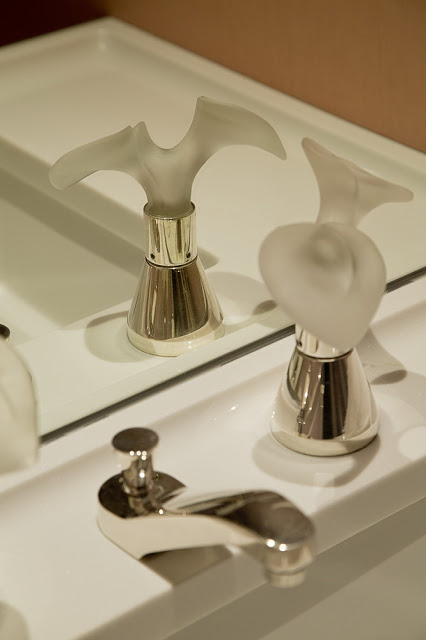
Vintage factice stoppers found by Lauren and made into faucet handles by PE Guerin

Lauren's has a wonderful ability to unearth unique objets on the Internet, such as the vintage factice bottle stoppers used in this home's powder room. (To read more about this amazing space and Lauren's role in creating it, read "Playbill: The Story of a Chic, Unexpected Powder Room.") Just one more reason Paul Wiseman is so happy to have her on board.


~ 

FAVORITE SOURCES: LA CORNUE

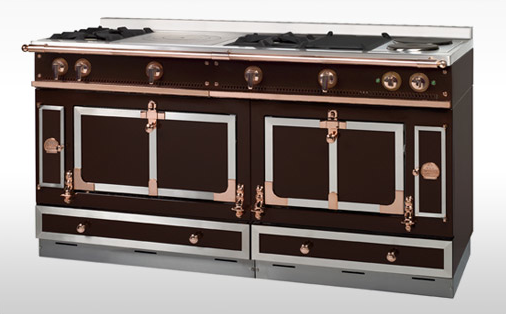
Château 165 with handsome profile, grand vaulted gas oven, standard electric oven, and choice of six cooktop configurations

La Cornue got its start in 1908 when founder Albert Dupuy took advantage of the installation of natural gas lines throughout Paris. Gas lighting had become widely available and with it came the possibility of using gas to fuel the kitchen stove. Mid-century, André Dupuy continued his father's business, updating old models and introducing new ones, such as the classic Château range. In 1985, Xavier Dupuy took over the company and, with a small staff of sixty, has presided over the development of an international company with a reputation for quality.

The Wiseman Group is asked to create seriously beautiful, beautifully serious kitchens for their clients. Fortunately for the design team, La Cornue makes rock solid ranges with gorgeous European styling. With La Cornue, the beauty of form does not have to be sacrificed to the practicality of function.

The company's line of high-end ranges are manufactured in France and operate somewhat differently than equipment manufactured in the US. For this reason, La Cornue makes a concerted effort to see that designers who recommend the ranges to their clients are familiar with the capabilities and functions of their products.

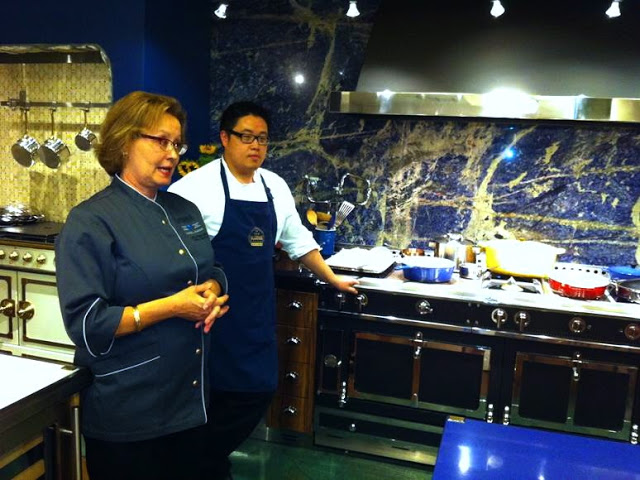
TWG was recently invited to attend an informational gathering about La Cornue at Purcell Murray's showroom in Brisbane. They partner with fine kitchen appliance brands and have two California showrooms where interested parties can go to experience those brands in a no-pressure setting. No better way for the TWG team to learn about La Cornue than to attend a hands-on demonstration at Purcell Murray with a gourmet meal served at the end!

Eric Remmen, La Cornue’s West Coast Manager, sharing information with TWG team members

Larissa Taboryski, La Cornue’s In-House Culinary Director, discussing the product line and preparing a demonstration

Carrie Swing, TWG Resource Coordinator, arranged the event with La Cornue

A delicious end to an informative demonstration

TWG staff (clockwise from top of table) Steven Brown, guest, Sadie Darsie, Heather Queen,
Samantha Schiff, Carrie Swing, Megan Munoz, and Shannon Jue

~


FIELD TRIP: RUSSEL WRIGHT MUSEUM

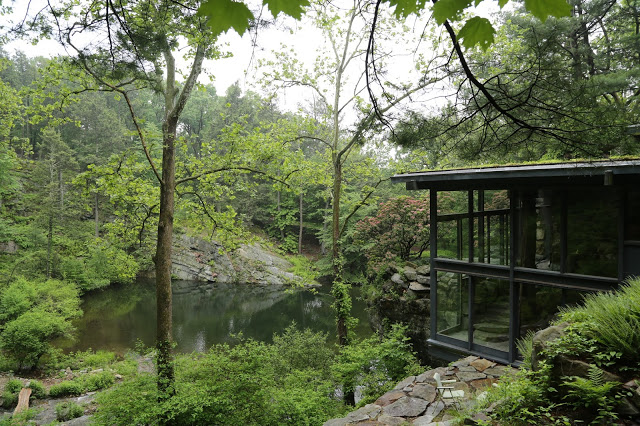
Russel Wright's modernist home in Manitoga, NY built into an abandoned stone quarry
Photos - Matthew Millman

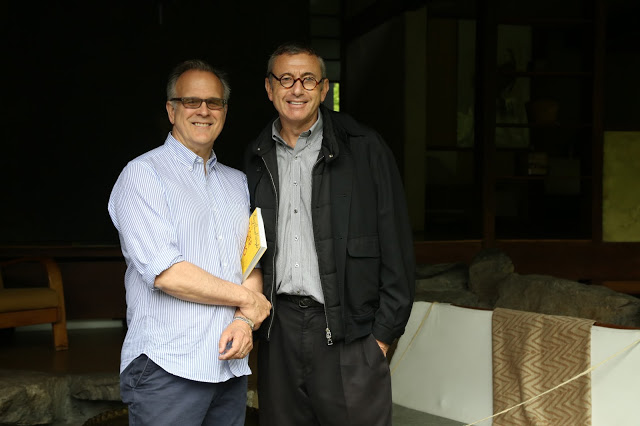
Paul Wiseman recently made a trip to New York with author Brian Coleman and photographer Matthew Millman. The trio is in the early stages of collecting data and photographs of TWG projects for the firm's book of interior design, to be published in 2014. Taking a break from the book project, the team toured Manitoga/The Russel Wright Design Center in the Hudson River Valley. They were hosted by John Danzer, who serves as a board member with the Center. John is the owner of Munder-Skiles, one of TWG's favorite sources for fine outdoor furniture. Munder-Skiles recently moved their showroom to Garrison, NY just an hour north of Manhattan in the Historic Hudson Highlands.

John Danzer gives Paul a tour of Russel Wright's home

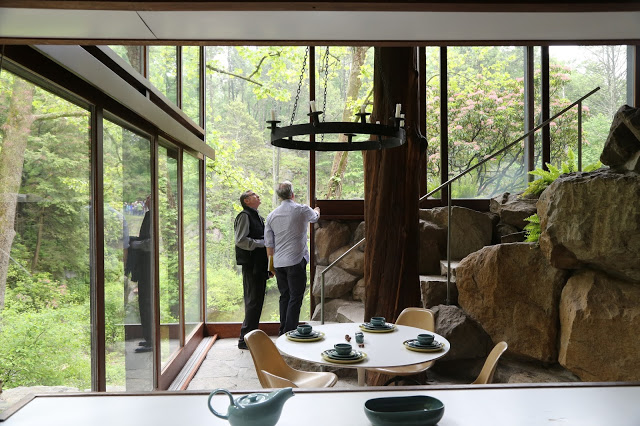
The Manitoga preserve allows visitors to experience Russel Wright's home, studio, and 75-acre woodland garden as a vibrant example of living in creative harmony with nature and the value of good design in daily living. According to John, "Wright was one of the early leaders in land healing that rings so true today. His innovative 'warm modern' house is built into the side of an abandoned industrial quarry. Manitoga was a remarkable remediation project with extensive planned natural gardens. It was truly ahead of it's time. We generously contribute to the Center because so much is to be learned by visitation and understanding Wright's advanced design thinking."

Dinnerware and furniture designed by Wright to achieve his concept of "easier living"
-- gracious, yet contemporary and informal

Large windows and natural elements bringing the outside in

Stone stairs, ferns, and tree trunk blurring indoor and outdoor spaces

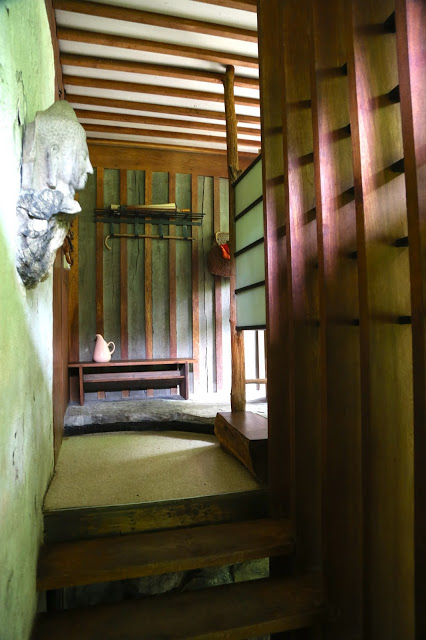
Stairway to the upper level suggestive of Japanese design 

Beautiful woodland garden enveloping the house

The Manitoga home is a National Historic Landmark, a member of the National Trust's Historic Artists' Homes and Studios Program, and a World Monuments Watch Site. It is one of the few 20th century modern homes open to the public in New York State.
~


FAVORITE SOURCES: LUTYENS FURNITURE & LIGHTING

Dining set Paul Wiseman chose for his own home in Belvedere,
recently featured in the monthly newsletter of Lutyens Furniture & Lighting

Sir Edwin Lutyens (1869-1944) had a prolific career as an architect. He is responsible for the design of numerous English country houses, fine commercial buildings, and monuments. Testament to his talents as an architect, Lutyens was tapped to design and build (circa 1911-1927) a section of the city of Delhi, eventually known as New Delhi, which would later serve as the seat of the Government of India. The jewel in the crown of his career is the Viceroy's House, the architectural centerpiece of New Delhi.

Perspective view of the south elevation of the Viceroy's House (now known as Rashtrapati Bhavan), New Delhi, India
 Photo: The Wolfsonian

In his early professional life Lutyens was influenced by the Arts & Crafts movement in England. He later produced designs with classical elements, but his time spent in India clearly had a profound influence on what evolved as his own, very distinctive style.

Lutyens garden bench with Indian design influence in evidence

Lutyens was an excellent designer of fine interior furniture which he produced in small quantities. Apparently few of the interiors he created survive intact and many pieces of his original furniture have been lost. Thankfully for those who appreciate fine design and craftsmanship, Candia Lutyens and her husband, architect Paul Peterson, formed Lutyens Furniture & Lighting with the specific aim of promoting the work of her grandfather. Since 1988 the company has been making high quality reproductions available to the trade. LFL also adapts original designs and conceives new pieces which apply the Lutyens design aesthetic and are suitable for 21st Century living. All the company's products are handmade to order.

Circleback chair

The Wiseman Group recently completed an extensive residential project in Hawaii using Lutyens-inspired designs fabricated by LFL. Numerous custom pieces made of walnut grace the home's interior while teak interpretations of Lutyens' iconic designs elegantly furnish the outdoor living spaces. If one is familiar with the history of the Hawaiian Islands, the use of Lutyens furniture contributes to the "suchness" of this home's lovely atmosphere. Given that the Hawaiian Islands were once the British Sandwich Islands gives historical authenticity to TWG's use of Lutyens' colonial designs.

New Delhi occasional table